

Know Your Shelf (Part 2): Should New Adult Be Considered a Children’s Genre?
For Part 1, which includes context about book genres and BISAC codes, click here.
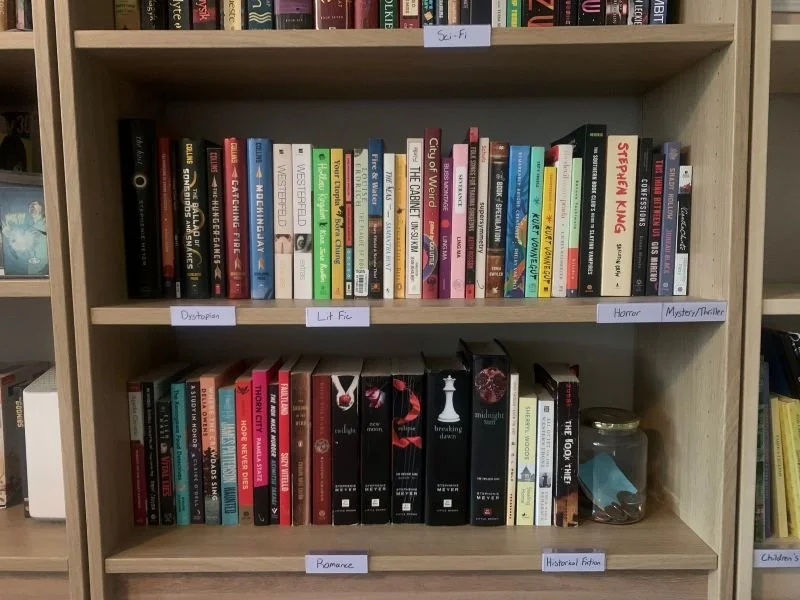
When I first entered the publishing industry, I was under the impression that the term “children’s books” referred to picture books and easy chapter books. I would think of examples like The Very Hungry Caterpillar or the Magic Tree House series. You can imagine my confusion when I encountered the idea that new adult books such as A Court of Thorns and Roses were also considered children’s books. If a three-year-old—the target audience for The Very Hungry Caterpillar—was reading A Court of Thorns and Roses, I would be quite concerned (albeit thoroughly impressed by their reading ability).
At Hellebore Literary Agency, we say that we represent all children’s book genres, and to us, that includes books in the new adult category. Interestingly, A Court of Thorns and Roses—arguably one of the most famous representatives of the new adult genre—is not officially designated as a new adult book; its BISAC codes indicate that it is an adult fantasy and adult romance despite the existence of a new adult BISAC code, FIC027240.
To reconcile Hellebore’s definition of new adult with the Book Industry Study Group’s definition, we must examine the genre’s origins and its current status in the industry.
The History of the New Adult Genre
The new adult genre was born in 2009 when a book blogger and an imprint of Macmillan ran a contest asking for “cutting-edge fiction with protagonists who are slightly older than YA...fiction similar to YA that can be published and marketed as adult—a sort of an older YA or new adult.” Widely considered a marketing gimmick, booksellers and editors did not take the prospect of the new genre seriously.
As a result, self-published authors did what they do best: pave their own way. The new adult genre rose to fame when self-pubbed books began hitting the bestseller list, alerting the industry that targeting 18–25-year-olds was a worthwhile endeavor.
Lending itself well to the romantic exploration common among those in their late teens and early twenties, new adult began as a branch of contemporary romance. As it has evolved over the years, it has broadened to include elements of genres like fantasy, thriller, and even horror, but romance has remained a key component of new adult books.
Why Hellebore Considers New Adult a Children’s Genre
Here’s the elevator pitch answer: in our experience, the writing styles of books considered to be new adult more closely match young adult writing. And here’s the industry answer: many children’s book publishers include new adult in their catalogs.
Genres are often nebulous and open to interpretation, and the process of assigning genres to books evolves slower than the speed of culture. This is exemplified in book industry organizations categorizing new adult books as young adult, despite the publishers classifying them as adult books.
Let’s go back to the ACOTAR example. Its BISAC codes, assigned by the publisher, mark it as an adult book. However, it has been nominated for or won multiple YA book awards and accolades, indicating that readers view the book as YA.
The bottom line is this: it’s hard to categorize books, especially when they defy traditional boxes. When we at Hellebore say we want new adult novels, it means we want protagonists who are between the ages of eighteen and twenty-five, we want romance, and ideally we want elements from other genres to be included so that the novels stand out.
That being said, we are interested in fiction that spans children’s ages, from ACOTAR to The Very Hungry Caterpillar and everything in between. Check out our submission guidelines for more info. ✿
