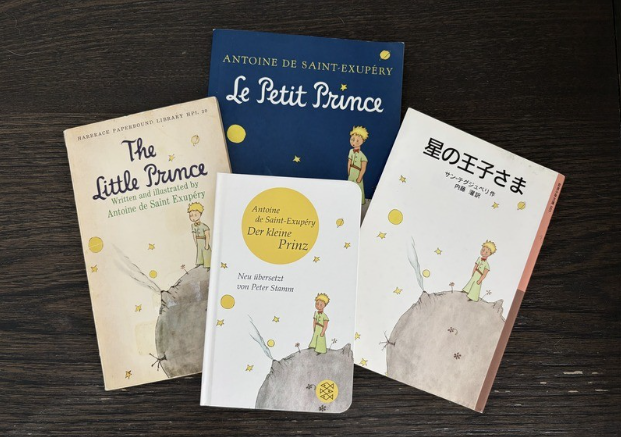
Adapted from the author’s 2024 publication “Prose by Any Other Name: Analyzing Changes to Translated Book Titles in Japanese and English.”
I came to publishing from a background in linguistics, and that enduring fascination with language, with cataloging patterns and analyzing why and how and when words (and the people using them) do what they do, continues to influence my work. A few years ago I decided to take a closer look at one intersection of linguistics and publishing—translated book titles. Since I speak Japanese, I focused specifically on books translated from English to Japanese.
A book’s title, just like its cover design, typeface, color scheme, back cover copy, and shelving location, is an integral part of its marketing. Authors spend long hours considering the perfect title—a title that is often replaced by editors and marketing specialists upon acquisition.
A good title helps a book reach its intended audience, and since a book in translation is effectively being transplanted from one audience to another, its title often undergoes a complete transformation to appeal to the new audience. These changes are more than just translator whim; language is inextricably tied to culture, and often a title must change to still carry emotional impact or elicit the intended response. These types of changes go beyond translation into what is known linguistically as localization.
Localization done correctly lets a publisher repackage a book for not just a language but a culture that is significantly different. Here are two of my favorite examples of clever localization from English to Japanese.
Little Women
Two of the most foundational texts in Japanese literature are The Tale of Genji (written in the eleventh century) and The Tale of the Heike (twelfth century). When Louisa May Alcott’s novel Little Women was translated into Japanese in 1906, the title, rather than being literally translated, alluded to those earlier Japanese titles.
The Tale of Genji | 源氏物語 (genji monogatari)
The Tale of the Heike | 平家物語 (heike monogatari)
Little Women | 若草物語 (wakakusa monogatari) (literally “The Tale of Young Grass”)
Modeling the Japanese title after well-known texts was a clever marketing tool to ensure readers immediately know that this title by an American author is a narrative similar in scope to the earlier Japanese texts: a family saga spanning many years. (The young grass part of the title may be referencing the youth of the main characters or the implied connection of their surname, March, to the spring grass that sprouts around the month of the same name.)
The Three Billy Goats Gruff
Another fun example is the Japanese translation of the classic Norwegian fairy tale The Three Billy Goats Gruff. In the English version, all three billy goats share the same name: Gruff. The Japanese title is identical in structure, but the goats’ name is different.
Japanese Title: 三びきのやぎのがらがらどん (sanbiki no yagi no garagaradon)
Literal Translation: The Three Goats garagaradon
The Japanese translator, Seta Teiji, could have chosen to use the Japanese word for “gruff” or even just spell the word phonetically with katakana (Japanese syllabary for load words), but he chose instead to use an onomatopoeia describing the sound a goat’s hooves might make while “trip-trapping” over a troll’s bridge. The Japanese lexicon contains thousands of onomatopoeias for everything from the sound of pouring rain (zā-zā) to the feeling of staring intently at something (jiro-jiro). Onomatopoeias are much more common in Japanese than they are in English, both in casual and formal contexts. Translating the titular goats’ names to an onomatopoeia works extremely well for a Japanese audience, particularly since the book is marketed to children and adults who would read aloud to children.
Final Thoughts
A title is a book’s most powerful marketing tool, and publishers seeking to publish books in translation or market books to foreign audiences must prioritize localization. After all, while an AI translator could easily give a word-for-word translation of The Three Billy Goats Gruff, it would not have the cultural knowledge and creativity to change the goats’ names to a Japanese onomatopoeia reminiscent of hooves clacking over a bridge. AI is useless without carefully curated prompts—a method of training not unlike situating a language within a defined cultural context.
Title changes highlight the importance of localization. If language, as author Rita Mae Brown says, is “the roadmap of a culture,” then the culture is a place unto itself, a rich landscape marked by breathtaking vistas and perilous pitfalls alike. Similarly, speaking a language without understanding its culture would be like using a map to navigate an invisible world. Without cultural context, language fluency and comprehension are meaningless; with it, language becomes an instrument of connection and change. ✿